Solve the following problems. The Circulatory System.

In The Heart What Separates The Oxygenated And Deoxygenated Blood A Ventricle B Vessel C Septum Brainly Com
Which of the following statements best describes the effect of increased carbon dioxide pressure in the blood.
. Which of the following chambers pumps blood toward the lungs. Which statement best describes capillaries. Which statement best describes the function of capillaries arteries and veins in the circulatory system.
- 10865057 marianjoymission marianjoymission 13022021 Science Elementary School answered Which statement best describes capillaries. Deoxygenated blood flowing through the pulmonary veins is carried to the right atrium. It collects deoxygenated blood from the lungs.
Returns blood to the heart. As the right ventricle contracts it sends oxygenated blood through the aorta to all tissues of the body. Thus option c is correct answer.
Pulmonary arteryall veins except pulmonary vein and the right chambers of the heart contains deoxygenated blood which is usually dark red in colour. All arteries contain valves to prevent the back-flow of blood c. D Oxygen diffuses from alveolar air into.
Blood circulates through the heart in two ways. Pulmonary arteries and venous system except for pulmonary veins. Which of the following statement s is are true about the heart.
The bodys blood-transporting system. Only pulmonary arteries carry deoxygenated blood from the heart to the lungs under low pressure which make the pulmonary arteries unique. Arteries bring oxygen-depleted blood back to the heart.
Carries blood away from the heart. Veins carry blood back to the heart. Functioning of nephron the blood enters the kidney through a long renal artery which branches into Many capillaries associated with the.
Which of the following statements best describes the function of the left side of the ventricle. Complete the following statement. The deoxygenated RBC then travels through the venules veins and return.
Which of the following statements best describes the function of veins. RBC exchanges oxygen with carbon dioxide as they are now known as deoxygenated RBC. Acarry deoxygenated blood to brain bpotect our body from harmful bacteria cremove waste that stay in the veins.
B Carbon dioxide diffuses from deoxygenated blood in capillaries into the alveolar air. Which of the following statements describes the function of the diaphragm. Arteries are strong elastic vessels that carry oxygenated oxygen-rich blood away from the heart to the other tissues of the body under high pressure.
Capillaries deliver blood to individual cells. All arteries carry oxygenated blood towards the heart b. Which of the following statement s is are true about heart.
Veins carry oxygenated blood. Veins deliver oxygen-rich blood to the heart. Valves prevent the backflow of blood into the atria and ventricles.
It carries blood throughout the body. It pumps oxygenated blood around the body via the systemic circulation. An artery is a blood vessel that only.
It serves as the passage of air into lungs. Ii Left ventricle pumps oxygenated blood to different body parts while right ventricle pumps deoxygenated blood to lungs. Which of the following best describes the process of gas exchange in the lungs.
It collects oxygenated blood from the lungs. A Air moves in and out of the alveoli during breathing. Veins carry deoxygenated blood.
I The left atrium receives oxygenated blood from different parts of the body while the right atrium receives deoxygenated blood from lungs ii Left ventricle pumps oxygenated blood to different body parts while right ventricle pumps deoxygenated blood to lungs iii Left atrium transfers oxygenated blood to. They are identified as the pulmonary circuit and the systemic circuit. C Oxygen and carbon dioxide diffuse down their concentration gradients between blood and alveolar air.
Which of the following statements best describes arteries. All arteries carry blood away from the heart d. It affects oxygen affinity and oxygen- carrying sulfur capacity It reduces the oxygen affinity and the oxygen-carrying capacity It increases the oxygen affinity but does not affect the oxygen-carrying capacity It reduces oxygen affinity but does not affect the oxygen- carrying.
I Left atrium receives oxygenated blood from different parts of body while right atrium receives deoxygenated blood from lungs. The bodys blood-transporting system. It contacts and relaxes during respiration to change the volume of the chest cavity.
It pumps oxygenated blood around the body via the systemic circuit. Which of the following statements best describes the function of the left ventricle. It pumps deoxygenated blood to the lungs via the pulmonary circulation.
Nephrons are the basic filtering units of kidney each kidney poses a large number of nephrons approximately 1to 15 million the main components of a nephron are glomarous Bowmans capsule a long renal tubule collecting duct. Veins carry blood away from the heart.
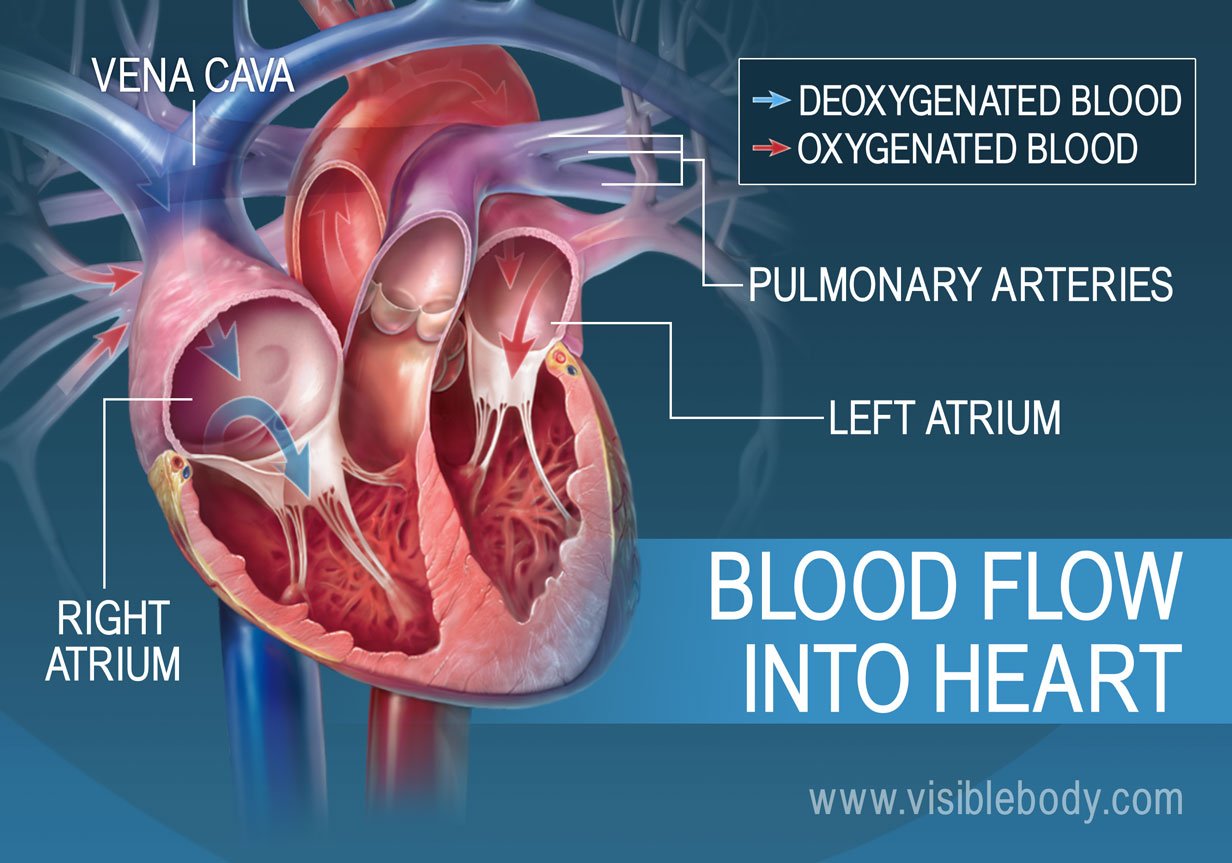
The Heart Circulatory Anatomy

Which Of The Following Structures Ultimately Drains Deoxygenated Blood From Heart Musculature Through Coronary Vein Into Right Atrium
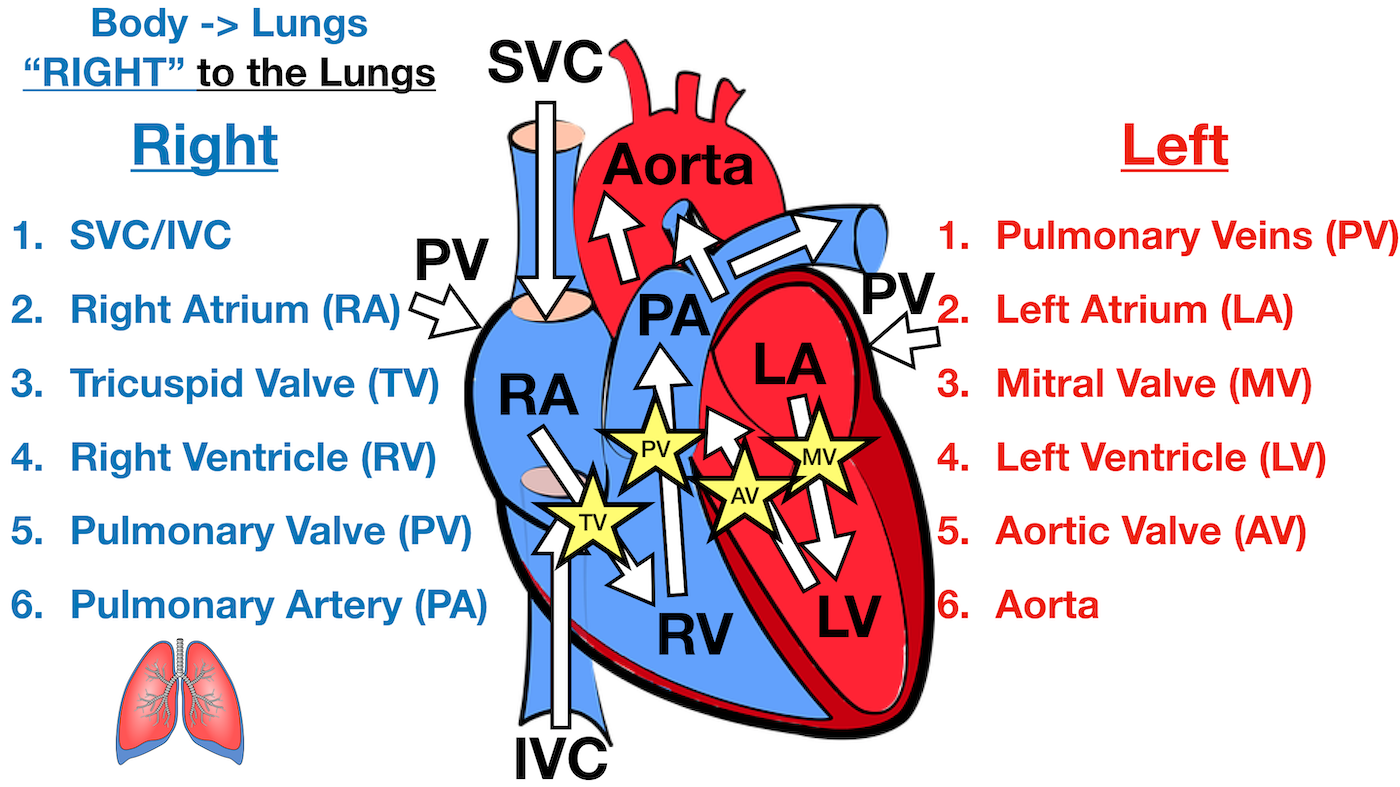
Blood Flow Through The Heart Step By Step Diagram



0 Comments